


A Better Routeplanner (ABRP)
4.5645.00 Reviews
App Specs
- Version
- Varies with Device
- Updated On
- License
- Free
- Downloads
- 1,000,000+
- Developer
- Rivian, LLC
- Categories
- Maps & Navigation
- Platform
- Android, iOS
Screenshots
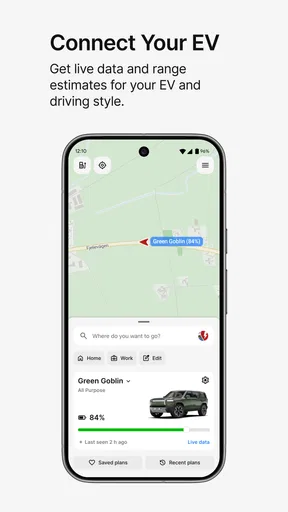
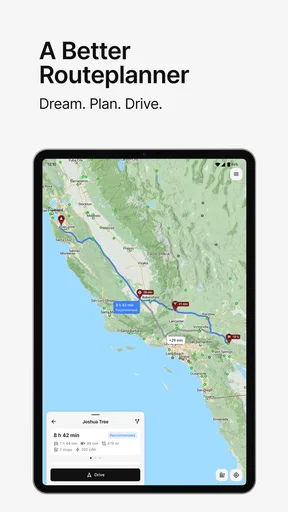
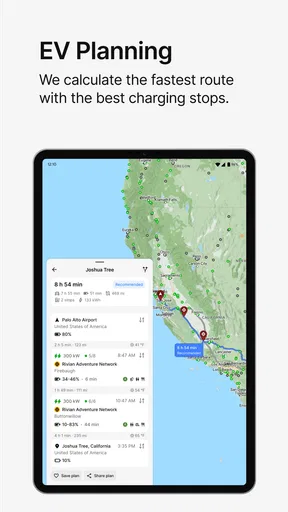
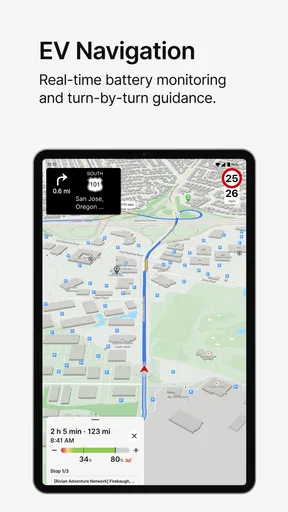
 Analysis by AppCompare
I judge an EV route planner less by how clever its map looks and more by whether I can understand the plan before I leave, then adapt when the trip changes. A Better Routeplanner (ABRP) is built around that specific problem: planning a drive where battery use and charging stops matter alongside directions. I find that focus useful for longer journeys, but it also means the app asks more of the driver than a basic navigation app does. Its value is clearest when I want to think through a trip in advance rather than simply start driving and follow the next turn.
Readable plans are useful, but they ask for attention
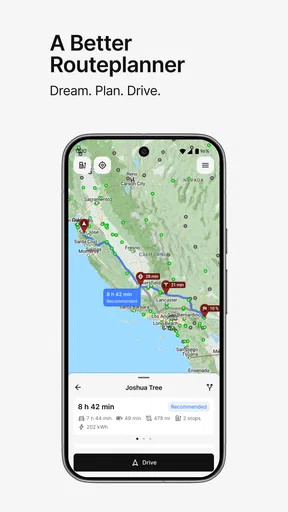
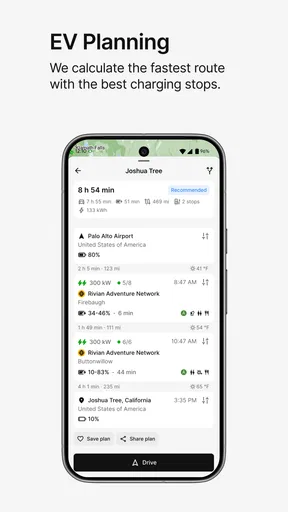
The core idea is straightforward: enter a destination and vehicle, then review a route that accounts for energy use and charging. For someone new to electric-car travel, that can make an unfamiliar journey feel more manageable. Instead of treating every charger as a separate search, the route gives charging stops a place in the overall plan. I like that the app is aimed at the whole journey, not only the next stretch of road.
That planning depth has a trade-off. A route with battery estimates, charging decisions, traffic, and weather is naturally more involved than a simple line from A to B. I would set up and inspect a longer route while parked, when I have time to compare options, rather than trying to learn the interface while driving. This is especially sensible for anyone who finds dense maps or multiple figures tiring to scan. The app can help organize information, but the driver still needs to make safe decisions and keep attention on the road.
Planning around different needs and energy levels
EV travel varies from person to person. Some drivers prefer fewer, longer stops; others would rather pause more often, keep each driving leg shorter, or avoid a stressful reserve level. ABRP’s route-planning approach is useful because it lets you work with a trip rather than assume that the shortest route is automatically the most comfortable one. I would use those choices to reflect my own routine, then check that the resulting plan feels practical instead of accepting it blindly.
A useful habit is to build in a little flexibility. A calculated charging duration is a planning aid, not a promise that a stop will fit neatly into a break or that every part of the journey will unfold as expected. Traffic, weather, driving style, and the time spent at a stop can all affect the day. If I were coordinating a trip with a passenger who needs regular breaks, I would consider the stop pattern as part of the comfort plan, not just the battery plan. That is a more human way to use an energy-focused route tool.
Where it fits among navigation choices
For a familiar daily commute, the navigation app already on a phone may be quicker: enter the destination, follow directions, and avoid thinking about charging if the trip does not require it. ABRP is more compelling when charging strategy changes the route itself, particularly for a drive through places I do not know well. I see it as a trip-planning companion rather than something every EV driver must open for every short errand. That distinction keeps the extra planning useful instead of turning it into unnecessary work.
ABRP is a Maps & Navigation app from Iternio Planning AB. It is free to install, with in-app purchases, and its age rating is Everyone. The app has a 4.5 average from around 22,000 ratings, with more than a million installs. Version 7.0.2 is the current version. Those figures suggest it is an established option, though popularity alone cannot tell you whether its planning style suits your own vehicle and habits.
Worth Reading Before You Choose

EA SPORTS FC Mobile 26 Is a Bigger Football Game, but It Takes Time

Flipboard Shows What News Apps Must Do Beyond the Feed

Switching to Android Auto Means Rethinking Your Driving Routine

Google Calendar Makes a Crowded Week Easier to Manage

Ludo King Makes the Most of the Minutes Between Plans

Baby Panda World Brings Quick Play to Modern Phones, but Its Game Library Feels Busy
Why ABRP Stands Out
First things first, let's talk about what makes A Better Routeplanner so darn special. If you've ever driven an EV, you know that planning your route isn't just about distance; it's about finding charging stations and managing your battery life. ABRP takes all that stress away by doing the heavy lifting for you.
With ABRP, you can input your vehicle type, and the app will calculate the most efficient route, considering factors like battery consumption, charging stops, and even real-time traffic data. It's like having a personal travel assistant—minus the coffee runs.
Features That Make a Difference
Now, let's break down some of the features that make this app a must-have:
- Customizable Route Planning: You can adjust your route based on speed, efficiency, or even scenic preferences. It's your trip, your rules.
- Live Traffic Integration: ABRP syncs with real-time traffic info to ensure you're always on the fastest track.
- Detailed Charging Stops: It doesn't just show you where to charge; it tells you how long you'll need to stay at each stop.
- Weather Forecast: Yep, it even considers the weather. Rain or shine, ABRP's got your back.
Honestly, the app's depth is impressive. You can even save your favorite trips or input multiple vehicles if you’re an EV enthusiast with more than one ride.
Using ABRP: A Real-World Experience
So, how does it feel to use the app? Imagine this: you're planning a weekend getaway. You open ABRP, enter your destination, and voilà—the app instantly calculates the best route for you. It feels like magic, but it's just smart tech at work.
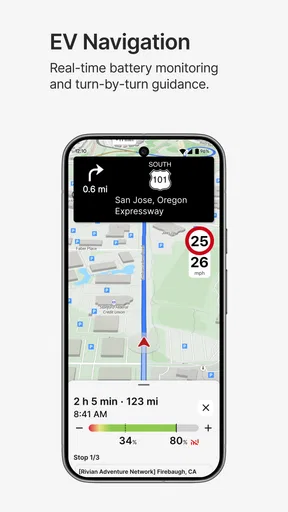
The user interface is sleek and intuitive. Even if you're not a tech whiz, you'll find navigating through the app a breeze. Plus, the map visuals are clear, and the instructions are easy to follow. It's like having a co-pilot who doesn't get car sick.
Final Thoughts on ABRP
At the end of the day, A Better Routeplanner is more than just a navigation tool—it's peace of mind. Whether you're commuting to work or exploring new horizons, ABRP takes the guesswork out of the equation, allowing you to focus on the journey ahead.
So, if you haven't tried it yet, give ABRP a shot. It's available for both Android and iOS, and trust me, once you experience the convenience, you'll wonder how you ever hit the road without it. Happy traveling, and don't forget to enjoy the ride!
Making an ordinary charging day easier
Consider a realistic weekday: I need to drive beyond my usual area, collect someone, and return later, with no certainty about traffic or how much energy the round trip will use. I would enter the destination before setting off, inspect where the proposed charging break falls, and decide whether that stop makes sense for the people travelling with me. If the plan calls for a pause at an awkward point, I can reconsider the route before I am committed to it. That is a practical benefit: the app helps expose the shape of the day, not just the road.
For a longer trip, I would save a route I expect to repeat and keep separate vehicle profiles when planning for different EVs. That reduces the chance of carrying assumptions from one car into another. A further useful check is to compare the suggested charging duration with the kind of break I actually want. If I need time for a meal or a rest, a route that minimizes charging time may not be the most comfortable overall. I would optimize for the journey I want to have, not only the battery calculation.
Who benefits from the extra detail
I would recommend the app most readily to EV drivers who take unfamiliar or longer routes, especially people who like to understand their charging plan before leaving. It can also help a household that shares more than one electric vehicle: saved trips and multiple vehicle entries make it easier to avoid starting every plan from scratch. Drivers who are anxious about arriving with too little charge may appreciate having battery use and stops treated as connected parts of the route.
On the other hand, it may be more planning than some people need. If most drives are short, familiar, and comfortably within the car’s available range, a regular map app is likely to be simpler. The same applies to someone who would rather decide charging stops spontaneously and does not want to review route settings. I would not recommend using a detailed plan as a substitute for judgment; changing conditions can make an estimate less useful, so it is worth checking the route again when circumstances shift.
Practical checks before relying on a route
One non-obvious advantage of route planning is that it gives me a chance to spot a mismatch before the car is moving. I can review whether a proposed stop breaks the drive into legs that suit my comfort, whether the route is too ambitious for how I prefer to drive, and whether weather or traffic could make the plan feel less reassuring. Rather than chasing a theoretically perfect route, I would choose one with a margin that suits my own tolerance for uncertainty.
I would also treat the map and charging estimate as a plan to consult, not an instruction to obey without thought. A charger’s position on a route does not by itself settle whether the stop works for my schedule or circumstances. If an unexpected delay changes the day, the sensible response is to pause somewhere safe and reassess, not to interact with the phone while driving. This distinction matters particularly for drivers who find on-screen information demanding: prepare the route while stationary, and let a passenger handle any necessary changes on the road.
Different abilities, different travel contexts
ABRP’s emphasis on planning can support different travel rhythms because charging stops are part of the journey rather than an afterthought. Someone who needs frequent rests can consider the stop pattern in advance; a driver travelling with children or another passenger can weigh comfort alongside efficiency. The app’s weather and traffic considerations also make it useful to think beyond distance alone. I would still judge each recommendation against personal needs, since no route calculation can decide what feels manageable for every traveller.
For sensory comfort, the clearest approach is to reduce decision-making while moving. I would review the route, charging sequence, and destination before departure, then avoid trying to interpret a busy screen in difficult conditions. The app’s maps and instructions may feel clear to me, but people differ in vision, attention, and comfort with information-heavy displays. Anyone who struggles with small map details or frequent visual checks should use a safer setup and rely on a passenger for adjustments where possible. Good planning helps, but it does not remove those barriers.
Costs, expectations, and the final call
The app is free to install, while optional in-app purchases range from $4.99 to $49.99 per item. I would begin with the free experience and decide whether any paid option is worth considering only after seeing how often I use the planner. That is a sensible approach for an occasional road-tripper, while a driver who regularly plans complex EV journeys may be more willing to pay for extras. Either way, the basic decision is whether this style of detailed preparation fits the way you travel.
For me, the strongest reason to choose ABRP is that it makes charging part of route planning instead of leaving me to stitch together separate decisions. Its trade-off is the attention it asks for: it is most helpful when I have time to set up a trip and less compelling when I only need a quick everyday direction. If you drive an EV beyond familiar local routes and like to arrive with a plan, I think it is worth trying. If you want the simplest possible navigation or prefer to make every decision on the fly, a conventional map app may suit you better.
Pros
- Intuitive interface for easy navigation.
- Comprehensive route customization options.
- Real-time traffic updates enhance planning.
- Seamless integration with various car models.
- Regular updates for improved accuracy.
Cons
- Premium features require a subscription.
- Occasional GPS signal loss reported.
- Battery drain can be significant.
- Limited offline functionality.
- User interface can be overwhelming for novices.
FAQs for A Better Routeplanner (ABRP)
What is A Better Routeplanner (ABRP) and how does it work?
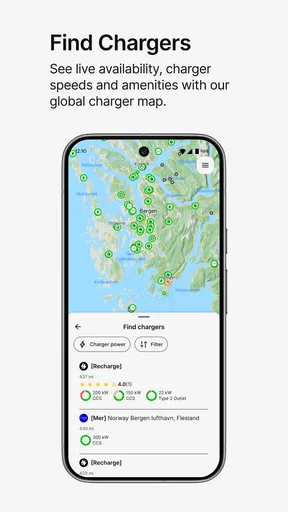
A Better Routeplanner (ABRP) is a navigation app designed for electric vehicle (EV) drivers. It provides optimal routes based on real-time data, including charging station locations, vehicle type, speed, and road conditions. By inputting your EV model and desired destination, ABRP calculates the best route, factoring in necessary charging stops to ensure a smooth journey.
Is A Better Routeplanner (ABRP) compatible with all electric vehicles?
ABRP is compatible with a wide range of electric vehicles. When setting up the app, you can select your specific vehicle model from a comprehensive list. This allows ABRP to tailor its route planning with accurate energy consumption estimates and charging station compatibility, ensuring a reliable route for your specific EV.
Does A Better Routeplanner (ABRP) require an internet connection to function?
Yes, ABRP requires an internet connection to provide real-time data, such as traffic updates and charging station availability. While you can plan routes offline, the app's full functionality, including live updates and dynamic re-routing, depends on an active connection to ensure you have the latest information during your travels.
Are there any subscription costs or in-app purchases in A Better Routeplanner (ABRP)?
ABRP offers both free and premium versions. The free version includes basic route planning features, while the premium version offers additional benefits like enhanced real-time data, better integration with other apps, and priority support. Subscriptions are available on a monthly or yearly basis, providing flexibility based on user needs.
How accurate is A Better Routeplanner (ABRP) in estimating arrival times and charging needs?
ABRP is renowned for its accuracy in estimating arrival times and charging needs by utilizing a vast database of vehicle specifications and real-time data. However, actual conditions, such as unexpected traffic or weather changes, can affect these estimates. Regular updates and user feedback help maintain and improve the app’s precision.


